
Is Rosemary Oil Safe to Use During Pregnancy?
Rosemary oil seems to be everywhere these days. Used in hair care, wellness rituals, aromatherapy, it’s become something of a cure-all that many people use without even thinking twice. But when you’re pregnant, “natural” doesn’t always equal “safe.” Is rosemary oil pregnancy safe? Is it dangerous? You deserve a straight answer based on what the evidence really says.
We get this question a lot from the women we see at myGynaePlus. So this post compiles everything you need to know from the research, what doctors say, and what the true gray areas are so you can decide what’s best for you and your baby.
What Is Rosemary Oil and Why Do Pregnant Women Use It?
Rosemary oil comes from the leaves of Rosmarinus officinalis. It’s been used as both a culinary herb and traditional medicinal herb for centuries. Rosemary oil contains many bioactive ingredients including camphor, 1,8 cineole (or eucalyptol), and alpha-pinene.
As with most herbs, there are many reasons people use it during pregnancy. If you’re using rosemary oil to unwind from stress or anxiety you may diffuse it. There’s some belief that aromatherapy oils in pregnancy like this can help relax the nervous system. Rosemary oil may also be applied topically as it’s one of the most common essential oils used for headaches. Many women experience tension headaches during the first trimester. Last, rosemary oil can be rubbed on the legs to help with circulation or applied to the scalp to prevent hair thinning.
While these uses make sense, how you take it, when you take it, and how much you take all matter significantly.
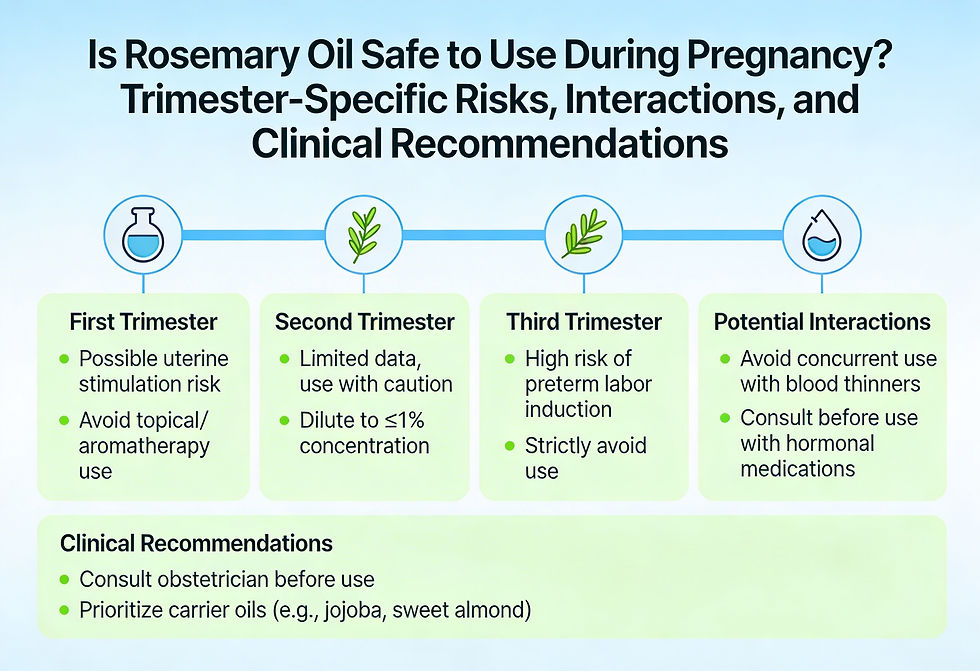
The Core Concern: Why Rosemary Oil Carries Risks in Pregnancy
Here is the bottom line. Rosemary oil is generally not recommended during pregnancy, and there are specific biochemical reasons for that caution.
1. It Contains Camphor
Tiny amounts of camphor are found in Rosemary oil. Camphor was traditionally believed to have abortifacient and contraceptive effects. More importantly from a practical standpoint, camphor is acutely neurotoxic in large amounts, and readily crosses the placenta. This means even small amounts could subject the foetus to its effects. An evidence-based review published in Clinical Toxicology in 2008 reaffirmed that camphor poisoning is a legitimate medical concern, topical applications included.
2. It Acts as a Uterine Stimulant
Rosemary, especially in essential oil form, is listed as a uterine stimulant. Uterine stimulants cause contractions of the uterus. You don't want that to happen during the first two trimesters of pregnancy. You want your uterus to be relaxed and at ease. Stimulating the uterus during pregnancy can lead to miscarriage.
Research published in Human Reproduction titled "Embryotoxic Effects of Aqueous Rosemary Extracts in the Rat" (Lemonica et al., 1996) tested rats for abortive effects of rosemary. Again, rats and humans are very different. But we don't need rats to have the same outcome as humans, only to show us there is enough of a possibility that we should avoid it.
3. The Data Gap Is Significant
Perhaps the most honest reason to be cautious is also the simplest: we do not have adequate human clinical trial data to confirm that topical or inhaled rosemary oil is safe during pregnancy. The Cosmetic Ingredient Review (CIR) panel in the United States reviewed rosemary-derived ingredients and returned an "insufficient data" conclusion specifically in relation to pregnancy, noting that reproductive toxicology data was lacking.
When data is missing in medicine, the appropriate response is caution particularly when a vulnerable developing foetus is involved.
Read More: Aromatherapy Oils to Avoid During Pregnancy
Is Rosemary Oil in Pregnancy Safe at Any Stage?
The risks are not uniform across all trimesters. Here is how most aromatherapy safety authorities and midwives break it down.
First Trimester: Avoid Entirely
During the first trimester (weeks 1-12), the foetus is known to be the most vulnerable. This is when organ systems are developing and the embryo can be affected easily by chemicals. International Federation of Professional Aromatherapists (IFPA) guidelines advise against use of any essential oils where possible during the first trimester, and rosemary has been listed as one to avoid throughout pregnancy by several resources, including Robert Tisserand and Rodney Young's Essential Oil Safety, considered the gold standard reference text for clinical aromatherapy.
Second and Third Trimester: Still Not Recommended for Topical Use
Topical application of rosemary oil to the skin is not recommended during pregnancy, even after the first trimester. Essential oils which are absorbed through the skin will also enter the bloodstream, which means the foetus will be exposed too. There isn't sufficient safety data we can trust to know this is safe.
If you would still like to continue using aromatherapy, diffusion (when the oil is put into the air and you breathe it in rather than absorbing it through your skin) is thought to be lower risk than applying directly to your skin, however should still only be done after your first trimester and with medical supervision.
Near Labour: A Different Conversation
Some NHS hospital trusts and midwifery units do incorporate essential oils in labour settings, but this is a supervised, clinical context managed by trained midwives. Rosemary is not typically among the oils used in NHS birthing centre aromatherapy protocols. Oils such as frankincense, grapefruit, and Roman chamomile appear more frequently in those guidelines.
What About Rosemary Oil in Shampoo During Pregnancy?
You may have noticed that this is a common question. This is likely due to the marketing claims of rosemary oil being able to help hair grow. Rosemary oil found in cosmetic items such as shampoo and conditioner should be avoided during pregnancy. This is because there simply is no reliable information to suggest that using rosemary topically is safe for pregnant people. Medical News Today specifically states this, saying there is no reliable information on the safety of using rosemary in cosmetics while pregnant.
The best news is that hair problems caused by pregnancy including increased hair loss during pregnancy or postpartum should be temporary. Your hormones should return to normal after childbirth, and so it should resolve on its own.
Is Eating Rosemary Safe During Pregnancy?
Here is an important distinction. Rosemary, used as a culinary herb the sprigs you add to a roast or scatter over focaccia is generally considered safe during pregnancy in normal food amounts. The US Food and Drug Administration (FDA) classifies culinary use of rosemary as "generally recognised as safe" (GRAS).
The danger comes with medicinal doses, supplements, and concentrated essential oils, which are a world away from the trace amounts in cooking. The NHS advises pregnant women to avoid herbal supplements and teas unless cleared by a midwife or doctor, and the same logic applies to rosemary preparations.
Safer Alternatives for Common Pregnancy Symptoms
If you were hoping to use rosemary oil for a specific reason, there are alternatives that carry better safety profiles during pregnancy.
For stress and anxiety: Lavender essential oil has the most research behind it for use in pregnancy and is generally considered safe from the second trimester onward when diffused in moderate amounts. Always use a well-ventilated room and limit diffusion sessions to around 15 to 20 minutes.
For headaches: A cool flannel, adequate hydration, and rest are first-line approaches. Speak to your midwife before applying anything to your scalp or temples.
For circulation: Gentle exercise such as walking and swimming, along with compression stockings where advised, are the evidence-backed approaches for pregnancy-related circulation issues.
For hair thinning after pregnancy: Once you are no longer pregnant or breastfeeding, rosemary oil can be reconsidered as a hair growth aid. Emerging research shows it may be comparable to minoxidil for certain types of hair loss which is genuinely encouraging news for the postpartum period.
When to Speak to Your Doctor or Midwife
Don’t wait until something goes wrong. If you have any concerns about any product – natural or not – while pregnant, seek advice beforehand. This includes any essential oil you intend on using frequently, herbal supplements or teas advertised for pregnancy, skin care products formulated with active botanical ingredients, and any negative shift you experience in your body after using a product.
Our team of clinicians at myGynaePlus practise obstetrics and gynaecology with a focus on straightforward and transparent dialogue. If you have questions regarding the safety of using products during your pregnancy, we are here to have that conversation with you. First pregnancy? Fifth? Ensuring you have accurate information from qualified clinicians can really make a difference.
The Bottom Line
The direct answer to "is rosemary oil pregnancy safe?" is not in the way most people think. As a culinary herb in normal cooking quantities, rosemary is fine. But as a concentrated essential oil applied to the skin, inhaled from a diffuser, or taken in supplement form, it carries enough risk during pregnancy and enough gaps in the safety evidence that most healthcare professionals, clinical aromatherapists, and obstetric authorities advise against using it.
Pregnancy is a time when the precautionary approach protects both you and your baby. Before adding any natural product to your routine, talk to a healthcare professional first. If you are looking for expert pregnancy guidance from specialists who take the time to listen, myGynaePlus offers comprehensive obstetric and maternity care from a team that genuinely understands what you are going through.
Frequently Asked Questions
1. Can rosemary oil cause a miscarriage?
There is no documented clinical case in humans directly linking aromatherapy-level rosemary oil use to miscarriage. The concern comes from its role as a uterine stimulant and its camphor content, which animal studies show can be embryotoxic at certain doses. The absence of proven cases is partly because the research simply has not been done, not because safety has been confirmed.
2. Is it safe to use rosemary oil in a diffuser during pregnancy?
Diffusing is considered lower risk than topical application, but it is still not recommended in the first trimester. From the second trimester onward, if you choose to diffuse any essential oil, keep sessions short (around 15 to 20 minutes), ensure the room is well ventilated, and check with your midwife or doctor first. With rosemary specifically, caution is still advisable even by this method.
3. I used rosemary oil before I knew I was pregnant. Should I be worried?
One-off or minimal exposure to rosemary oil especially via inhalation rather than skin application is unlikely to cause harm. The concerns relate to regular or high-dose use. If you are anxious, raise it with your midwife at your next appointment so they can offer reassurance specific to your situation.
4. Can I use rosemary oil while breastfeeding?
The safety of rosemary oil during breastfeeding is also uncertain. Essential oil compounds can transfer into breast milk, and some sources advise against use while nursing. Speak to your healthcare provider before using any essential oils regularly during this period.
5. When can I safely start using rosemary oil for hair growth after pregnancy?
Most practitioners suggest waiting until you have finished breastfeeding, or at minimum discussing it with your GP or midwife beforehand. Once cleared, rosemary oil applied topically to the scalp diluted in a carrier oil at a 1 to 2% concentration is a reasonable option to explore for postpartum hair shedding, with emerging research supporting its use for certain types of hair loss.


Comments